
TV Mounting Coast Huntington Beach: TV Mounting on Lath-and-Plaster Walls in Huntington Beach
TV Mounting Coast Huntington Beach covers TV mounting on lath-and-plaster walls in Huntington Beach's older beach cottages — the small pre-war and early post-war homes near downtown and the older streets inland from the pier — where the plaster is hard and brittle, the studs hide behind wood lath, and every hole is drilled to keep the wall from cracking.
Bookings aren't open yet. Leave your name and number; your message is recorded, and you'll get one message when a local installer is available.
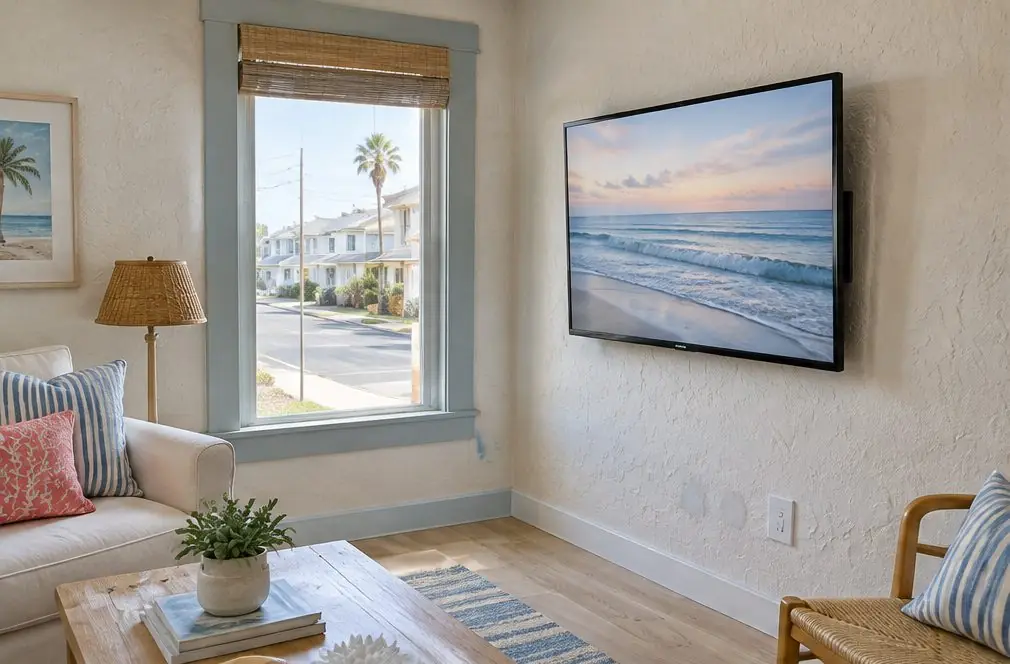 Illustration
How a plaster wall is built
| Layer, outside to inside | What it is | What it means for drilling |
|---|---|---|
| Finish coat | Thin, hard lime or gypsum plaster | Chips if drilled fast with a dull bit |
| Brown and scratch coats | Thicker plaster pressed into the lath | Holds poorly on its own |
| Wood lath | Narrow strips nailed across the studs | Hides the studs from many stud finders |
| Studs | Solid lumber, sometimes at irregular spacing | The only thing the mount should rely on |
Finding studs behind lath
Magnetic finders that locate the lath nails, a series of small test holes behind the plate's footprint, and the outlet boxes (usually fixed to a stud) together find the framing. Older cottages do not always have studs at a regular 16 inches, so each one is confirmed before the plate is marked.
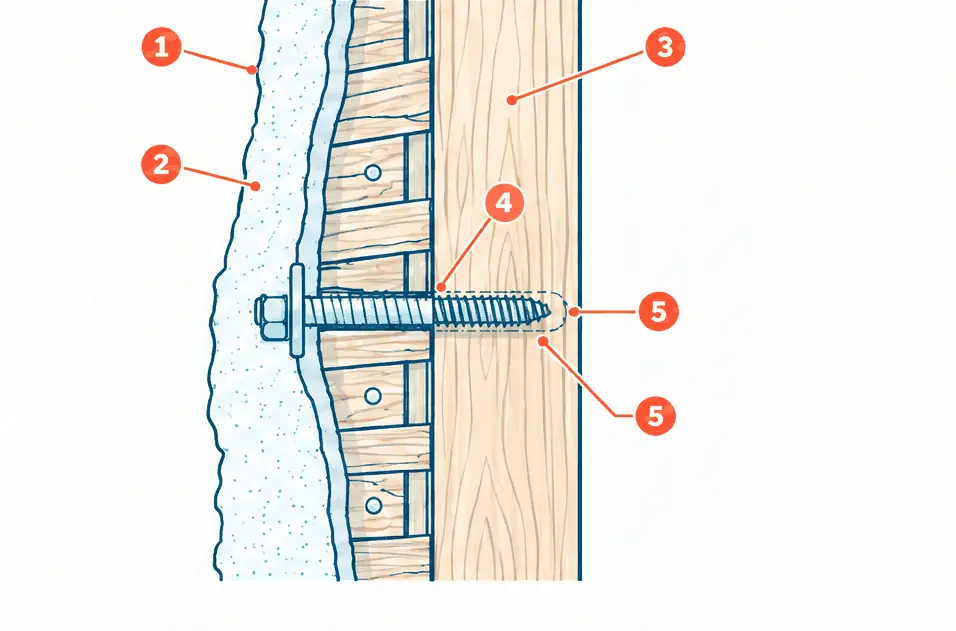
What the numbers show
- Plaster coat Hard plaster can crack around a hole; it is drilled slowly with a sharp bit, often through painter's tape.
- Wood lath strips Thin horizontal strips nailed across the studs hold the plaster; they are not a fastening point.
- The stud behind Studs are found with a deep-scan finder or a magnet on the lath nails, and confirmed with a small test hole.
- Longer lag bolt The bolt is long enough to pass through plaster and lath and still reach well into the stud.
- Pilot hole A pilot hole through plaster, lath and into the stud keeps the wood from splitting and the plaster from cracking.
Drilling without cracking
- Sharp masonry or carbide bit for the plaster, then a wood bit for the stud.
- Low speed, no hammer setting so the vibration does not loosen the plaster keys behind the lath.
- Pilot holes first, then the lag bolt driven by hand or at low torque.
- Patching of test holes with plaster patch, not spackle alone, so it does not shrink.
Old plaster rewards patience: slow drilling is the difference between four clean holes and a cracked wall.
Wires on a plaster wall
Fishing cables inside a plaster wall is slower than in drywall because of the lath and the plaster keys. A slim paintable raceway, a console placed directly below the TV, or a route through an adjacent closet are common choices; in-wall rated kits work where a clean stud bay can be found.
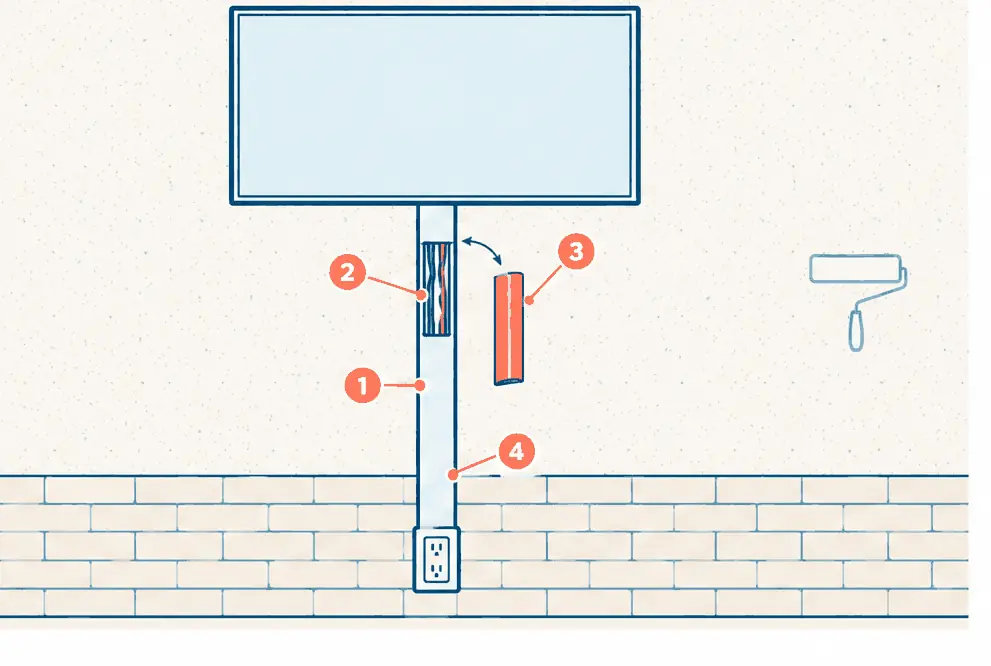
What the numbers show
- Raceway channel A slim two-part channel is fixed to the wall; the cables lie in its base and the cover snaps on.
- Cables inside Signal cables and the TV's own power cord run inside to an existing outlet; no new wiring is added in the wall.
- Paint to match The cover takes paint, so it reads as part of the wall.
- Straight run A straight vertical run from the centre of the TV to the outlet looks deliberate and is easy to remove later.
TV Mounting on Lath-and-Plaster Walls — common questions
How much more does a plaster wall cost?
About $30–$50 on top of the base range in 2026, so roughly $139–$199 for a 32–49 inch TV on lath and plaster.
Can a plaster wall hold a large TV?
Yes, when the mount is fastened into the studs behind the lath with bolts long enough to reach solid wood.
TV Mounting on Lath-and-Plaster Walls: check availability and price range
Bookings aren't open yet — tap what fits your TV and wall and get a typical Huntington Beach price range right here. Typical Huntington Beach prices for one TV, labor only unless an option says otherwise. This is a market estimate, not a quote.